
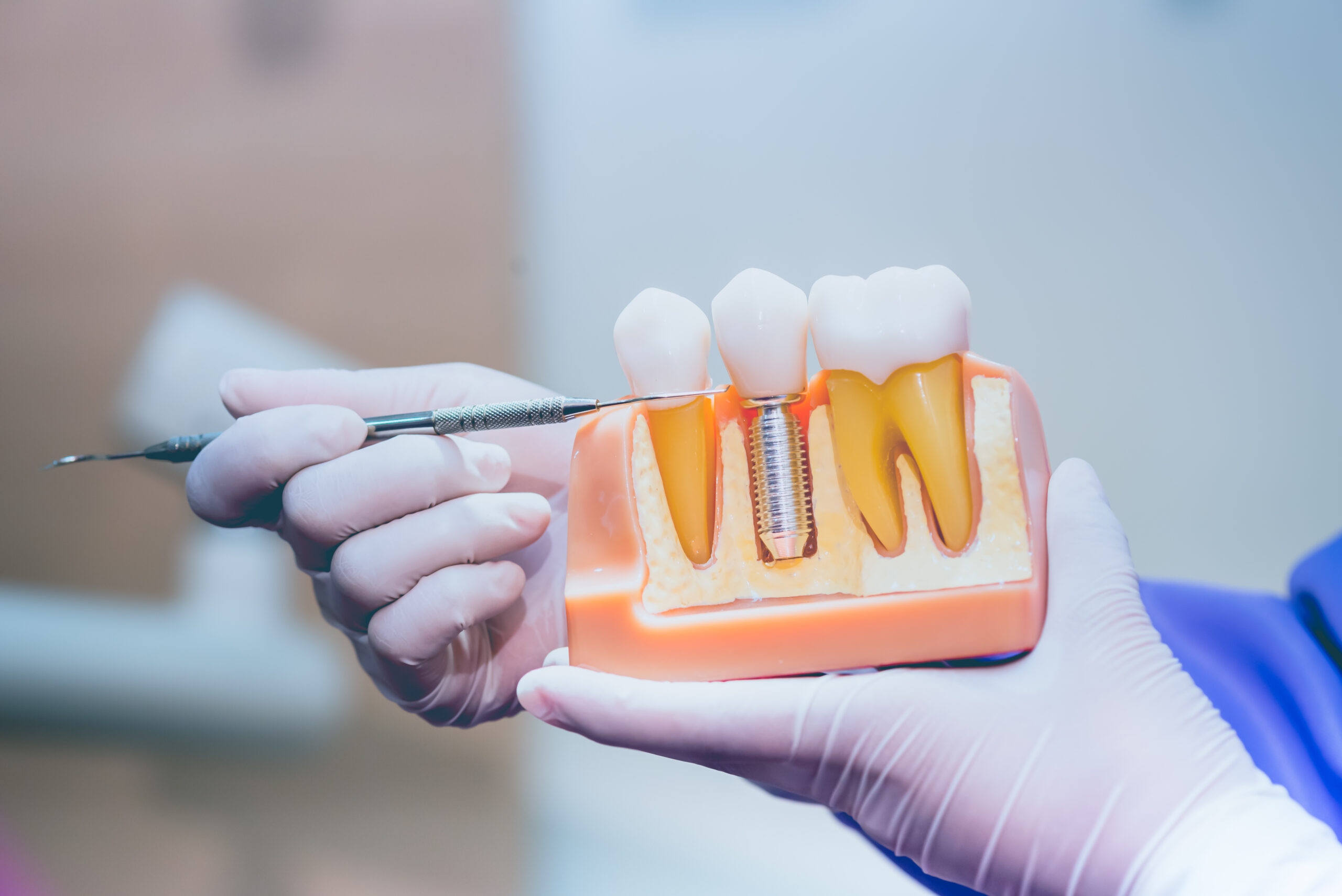
You may be a candidate for full-arch dental implants if you are missing most or all of the teeth in one or both arches, have enough jawbone to support several implants (or are open to bone grafting to build it up), and are in good enough general health to heal from a surgical procedure. Candidacy ultimately depends on a hands-on evaluation of your oral health, bone volume, and medical history, since no two smiles start from the same place.
At Ponce Dental Studio, we use advanced diagnostic technology and comprehensive evaluation methods to determine whether full-arch dental implants are the right fit for each patient who comes through our door. Our team looks at multiple factors before recommending treatment, because full-arch implants represent one of the most effective solutions for complete tooth replacement, offering stability and function that traditional dentures cannot match.
Who May Be a Good Candidate for Full-Arch Dental Implants?
Full-arch dental implants are designed for adults who have lost, or are on the verge of losing, most or all of their natural teeth in an arch. While every case calls for an individual evaluation, most good candidates share several traits in common:
- Extensive tooth loss or damage: Multiple missing or failing teeth in one or both arches, or teeth too decayed or broken to save.
- Frustration with removable dentures: Loose, uncomfortable, or slipping dentures that make eating and speaking difficult.
- Adequate bone volume, or a willingness to build it: Sufficient jawbone density to support several implants, or openness to bone grafting when volume is lacking.
- Generally good overall health: Any chronic conditions, such as diabetes, are well controlled and unlikely to interfere with healing.
- A fully developed jaw: Most candidates are adults past the age of 18, once jaw growth is complete.
- Commitment to the process: Willingness to follow through on a multi-month treatment timeline and to maintain daily oral hygiene afterward.
Meeting these traits does not guarantee candidacy on its own. A thorough evaluation is still necessary to confirm that full-arch implants are the right long-term option for your smile.
How Full-Arch Dental Implants Work
Rather than replacing each missing tooth individually, full-arch treatment uses a smaller number of strategically placed implants, typically four to six per arch, to anchor an entire row of fixed replacement teeth. This approach, sometimes called All-on-4 dental implants, allows patients with significant bone loss to often avoid extensive grafting while still achieving a stable, non-removable result. Because the implants fuse directly to the jawbone, the finished restoration functions much closer to natural teeth than a removable denture can.
Evaluating Your Current Oral Health
Missing most or all teeth in one or both arches makes you a potential candidate for full-arch implants. Whether you currently wear dentures, have failing teeth, or have been without teeth for some time, this treatment can provide a long-term solution.
The condition of your remaining teeth influences your treatment approach. Severely damaged or decayed teeth that cannot be saved may actually make full-arch implants a better long-term solution than attempting individual repairs. Gum disease must also be controlled before implant placement, so our team evaluates your periodontal health and addresses any active infection before proceeding with surgery; gum disease treatment may be a necessary preliminary step. Previous dental work does not necessarily disqualify you from full-arch implants, since our comprehensive evaluation considers your full dental history and how it might affect your treatment plan.
Bone Health and Structural Considerations
Sufficient bone height, width, and density are required to support full-arch implants successfully. We use advanced imaging technology to evaluate your bone structure in three dimensions, which allows for accurate treatment planning.
Bone loss commonly occurs after tooth extraction, but this does not automatically rule you out as a candidate. Several bone grafting techniques can rebuild lost volume when necessary. The location and quality of remaining bone influence the number and placement of implants needed, with some patients requiring four implants per arch while others need six or more for optimal support. In cases of more advanced bone loss in the upper jaw, options such as zygomatic implants anchor into a different area of facial bone entirely, which can help patients who would otherwise need extensive grafting.
Medical Factors That Affect Candidacy
Certain medical conditions call for special consideration but do not necessarily prevent full-arch implant treatment. Well-controlled diabetes, for example, may not disqualify you if your blood sugar levels remain stable.
Smoking significantly affects healing and implant success rates. While not an absolute barrier to treatment, smoking cessation is strongly recommended before and after implant surgery. Some medications, particularly those that affect bone metabolism, may influence your treatment plan, so our team reviews all medications and supplements to help plan safe treatment. A history of cancer treatment also calls for careful evaluation, since radiation therapy to the head and neck area can affect bone healing and implant success.
Full-Arch Implants Compared With Traditional Dentures
Many patients considering full-arch implants are weighing them against traditional removable dentures. Dentures rest on the gums and typically need adhesives or suction to stay in place, which can shift while eating or speaking. Full-arch implants anchor to the jawbone itself, so the replacement teeth function more like a natural set and do not rely on the same daily upkeep. Implants also help preserve jawbone volume over time, since the bone continues to receive stimulation from the implants in a way that it does not under a removable denture. The right choice still depends on your bone health, budget, and personal preferences, which is why this comparison is part of every evaluation.
What to Expect During Your Evaluation and Treatment Timeline
Our evaluation begins with a thorough medical and dental history review to identify any factors that might affect treatment success. We discuss your goals, concerns, and expectations to help determine whether full-arch implants align with your needs.
Advanced 3D imaging provides detailed information about your bone structure, nerve locations, and sinus positions, which supports precise treatment planning and helps identify anatomical challenges early. Digital impressions create accurate models of your mouth, and our in-house lab capabilities allow us to create solutions tailored to your specific anatomy. From that first evaluation through final restoration placement, full-arch treatment typically involves multiple appointments spaced over several months, so realistic expectations about the pace of treatment and the healing process matter as much as the clinical factors above.
Alternative Options When Full-Arch Isn’t Suitable
If full-arch implants are not appropriate for your situation, several alternatives may provide good results. Single tooth implants can replace individual missing teeth when some healthy teeth remain. Traditional dentures or implant-supported partial dentures may be suitable options when bone loss is extensive or medical conditions preclude full-arch treatment. Dental bridges can also replace multiple missing teeth when adequate support teeth remain healthy and strong.
Discover Your Full-Arch Implant Options at Ponce Dental Studio
At Ponce Dental Studio, our team uses the latest diagnostic technology and treatment techniques to help as many patients as possible achieve their goals with full-arch dental implants. We provide detailed consultations that address your questions and concerns, so you have the information needed to make confident decisions about your oral health. Our commitment to price transparency means you understand your investment from the beginning, and we offer financing options to help make treatment accessible.
Determining your candidacy for full-arch dental implants requires a professional evaluation, and advances in implant dentistry have expanded treatment options significantly even for patients with bone loss or other complicating factors. Check out our YouTube page for educational videos about full-arch implants, and schedule your comprehensive evaluation today to find out if full-arch dental implants can transform your smile and quality of life.
Frequently Asked Questions About Full-Arch Dental Implant Candidacy
Can I get full-arch dental implants if I have bone loss?
Bone loss does not automatically rule out full-arch implants. Depending on how much bone remains, treatment may involve a bone graft to rebuild volume, or implants placed at an angle or in a different area of facial bone to bypass the affected area. A three dimensional scan during your evaluation shows exactly how much bone is available and which approach fits your situation.
How long does the full-arch dental implant process take from start to finish?
Full-arch treatment typically spans several months from the initial evaluation to the final restoration. The timeline depends on factors such as whether bone grafting is needed, how quickly your jawbone heals around the implants, and how many appointments your specific treatment plan requires. Your care team can give you a more precise estimate once your evaluation is complete.
Are full-arch dental implants better than dentures?
Full-arch implants and traditional dentures each have a place depending on a patient’s oral health, budget, and preferences. Implants are anchored to the jawbone, so they generally offer more stability and help preserve bone volume compared with a removable denture. Traditional dentures remain a reasonable option for patients who are not candidates for surgery or who prefer a non-surgical solution.
What can disqualify someone from getting full-arch dental implants?
Few factors are absolute disqualifiers on their own. Uncontrolled chronic conditions, active gum disease, insufficient bone volume without a willingness to graft, or an inability to safely undergo sedation or anesthesia can delay or complicate treatment. Most of these factors can be addressed or managed before or during the evaluation process, which is why a full workup is necessary before ruling anyone out.
Does smoking affect my candidacy for full-arch dental implants?
Smoking is not an automatic disqualifier, but it does affect healing and can lower long-term implant success rates. Patients who smoke are strongly encouraged to cut back or quit before surgery and during the healing period that follows. Your care team can discuss cessation resources and how smoking history factors into your specific treatment plan.
 Dr. Frank Nia is a distinguished cosmetic and restorative dentist, co-founder of Ponce Dental Studio in Atlanta, GA. With a DMD from the University of Pennsylvania School of Dental Medicine and an MSEd in Higher Education, Dr. Nia brings over a decade of experience in managing multi-site dental practices. Known for his innovative approach to dentistry, he combines cutting-edge technology with compassionate care. Dr. Nia is a Fellow of the International Congress of Oral Implantologists and holds licenses in multiple states, including certification for oral and I.V. Sedation therapy in Georgia.