
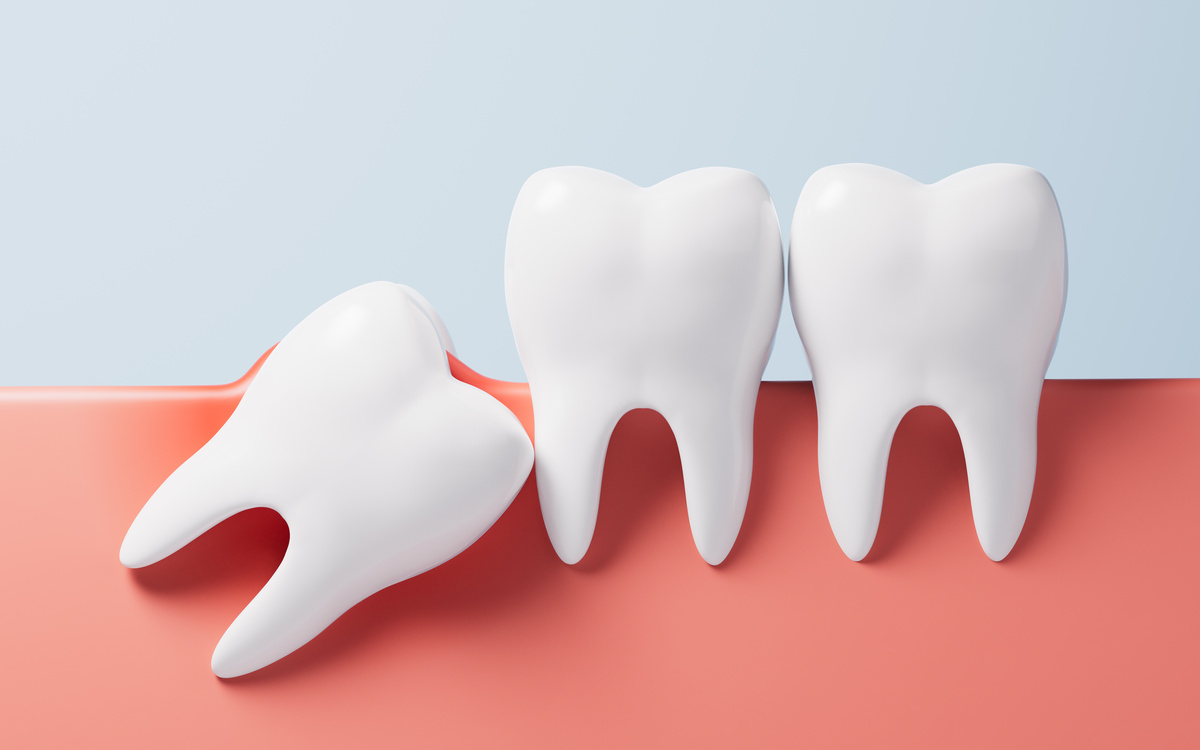
No, wisdom tooth extraction is not always necessary. Wisdom teeth that have come in fully, sit in a healthy position, can be cleaned well, and show no signs of disease can often stay, as long as they are checked regularly. Removal is generally recommended when a wisdom tooth is causing problems or, based on imaging and an exam, has a high risk of causing them.
At Ponce Dental Studio, the decision starts with an evaluation rather than a default. Our team uses digital X-rays or 3D imaging to look at each tooth’s position, root development, and relationship to nearby teeth and nerves, and our oral surgery team, which includes board-certified oral and maxillofacial surgeon Dr. Shahrokh C. Bagheri, handles removal when it is the right choice.
What the Evidence Says About Removing Healthy Wisdom Teeth
This is a question where professional opinion and research do not fully line up, and it helps to know both sides. The American Association of Oral and Maxillofacial Surgeons (AAOMS) explains in its guidance on wisdom teeth management that a wisdom tooth should be removed when it causes problems such as pain, infection, gum disease, cavities, cysts, or damage to neighboring teeth. It also notes that wisdom teeth that grow in completely and are functional, painless, cavity-free, and disease-free may not need extraction, and that teeth left in place should be monitored with annual checkups and periodic X-rays.
On the other side, a Cochrane systematic review concluded that there is not enough evidence to say whether impacted wisdom teeth that are free of symptoms and disease should be removed or kept, and it recommends regular monitoring when they are kept. Critics of routine removal, such as the author of a widely cited American Journal of Public Health article on preventive wisdom tooth extraction, argue that removing healthy, symptom-free teeth is not supported by strong evidence. In practice, this means the decision should be individual, based on your imaging, your exam, and your preferences.
When Removal Is Usually Recommended
Wisdom teeth typically come in between about ages 17 and 25. Many do not have enough room to erupt fully, and a tooth that is trapped under the gum or bone is called impacted. Removal is commonly recommended when there is a clear problem, such as:
- Repeated gum infection: pericoronitis, an infection of the gum flap over a partially erupted tooth.
- Decay that cannot be treated: in the wisdom tooth or the molar next to it.
- Damage to the neighboring molar: including bone loss or root problems caused by the impacted tooth.
- A cyst or other growth: around the tooth, seen on imaging.
- Gum disease around the back teeth: that cannot be controlled while the tooth remains.
Regular monitoring through dental x-rays helps identify some of these problems before they cause pain, since not every issue causes symptoms right away.
Symptoms Worth Getting Checked
Pain or swelling in the back of the mouth, tender or bleeding gums around the last molars, difficulty opening your mouth fully, a bad taste, or persistent bad breath near the back teeth can all point to a wisdom tooth problem. Swelling of the face or jaw with fever, or trouble swallowing or breathing, needs prompt care because an infection can spread.
When Wisdom Teeth Can Stay
Wisdom teeth that are fully erupted, aligned with your bite, and easy to clean may never need removal. If they cause no pain and your exams show no decay, gum disease, or changes on imaging, keeping them is a reasonable choice. Your dentist should continue checking them at routine visits, because their position at the back of the mouth makes them harder to clean and more prone to decay and gum problems over time.
Some impacted teeth that are fully covered by bone and show no disease are also monitored rather than removed, especially in older adults, where the risks of surgery may outweigh the benefits. This is a judgment your surgeon will walk through with you.
Why Timing Can Matter
If removal is recommended, the age at which it happens can affect how the procedure goes. In younger patients the roots are often not fully formed, and many oral surgeons find that removal and recovery tend to be easier in the late teens or early twenties than later in adulthood. That is one reason an evaluation around the time wisdom teeth are developing is useful, even if the outcome is simply a plan to monitor them.
Postponing a recommended wisdom teeth removal can allow an infection to recur or damage to a neighboring tooth to progress. Waiting is not always harmful, but it is worth deciding on purpose, with current imaging, rather than by default.
Recovery at a Glance
Most patients return to normal activities within a few days after tooth extraction, with the most discomfort in the first two to three days. The gum and bone continue to heal over the following weeks. Following your aftercare instructions, such as avoiding straws and smoking early on, lowers the risk of complications like dry socket.
Frequently Asked Questions About Wisdom Tooth Removal
Should I remove wisdom teeth that do not hurt?
Not necessarily. Pain is not the only sign of a problem, so an exam and imaging matter more than symptoms alone. If your wisdom teeth are healthy, cleanable, and show no disease, monitoring them is a reasonable option. If imaging shows decay, infection, a cyst, or damage to a neighboring tooth, removal is usually recommended.
What age is best to have wisdom teeth evaluated?
Wisdom teeth usually emerge between about ages 17 and 25, so an evaluation in the late teens or early twenties is common. An early evaluation does not mean early surgery. It gives you a baseline so that any decision to remove or monitor the teeth is based on how they are developing.
Who removes wisdom teeth at Ponce Dental Studio?
Wisdom teeth are removed by the oral surgery team, which includes board-certified oral and maxillofacial surgeons. If your case calls for care outside an office setting, your surgeon will explain why and help coordinate the next step.
Will I be awake during wisdom tooth removal?
That depends on the complexity of the extraction and your comfort level. Options range from local anesthesia for a simple extraction to sedation, including IV sedation, for impacted teeth or anxious patients. Your surgeon will review your health history and help you choose.
How long does recovery take after wisdom teeth removal?
Most people feel the most soreness and swelling in the first two to three days and return to work or school within a few days. Full healing of the gum and bone takes several weeks. Recovery is often quicker for simple extractions than for impacted teeth.
Trust Ponce Dental Studio for Wisdom Tooth Evaluation
Deciding whether your wisdom teeth need removal starts with a thorough exam and clear imaging. We combine digital imaging with AI-supported analysis to assess each tooth’s position and risks, and we explain the options of removal and monitoring in plain language so the decision is yours.
At Ponce Dental Studio, we prioritize price transparency and patient comfort throughout the process. Whether you need one tooth removed or all four, our team provides cost estimates before treatment and can walk you through financing options. Contact our office to schedule your wisdom tooth evaluation, and explore our YouTube channel for patient education videos about oral surgery procedures.
 Dr. Frank Nia is a distinguished cosmetic and restorative dentist, co-founder of Ponce Dental Studio in Atlanta, GA. With a DMD from the University of Pennsylvania School of Dental Medicine and an MSEd in Higher Education, Dr. Nia brings over a decade of experience in managing multi-site dental practices. Known for his innovative approach to dentistry, he combines cutting-edge technology with compassionate care. Dr. Nia is a Fellow of the International Congress of Oral Implantologists and holds licenses in multiple states, including certification for oral and I.V. Sedation therapy in Georgia.
