
Oral cancer often develops without pain or obvious warning signs, which means many people don’t notice a problem until it has already progressed. In the United States, thousands of new cases of this disease are diagnosed every year, which can affect the lips, tongue, cheeks, gums, and throat. Catching it early gives patients the best chance at a full recovery, which is why screening frequency matters as much as the exam itself. Most dental professionals recommend an oral cancer screening at least once a year as part of a routine visit, though your dentist may suggest more frequent checks depending on your personal risk factors.
At Ponce Dental Studio, we build oral cancer screenings into our preventive care so that any changes in your mouth are identified as soon as possible. Our team combines a hands-on exam with advanced technology, giving you an extra layer of reassurance every time you visit.
Who Should Consider More Frequent Screenings?
While an annual screening is enough for most patients, some people benefit from being checked more often. Tobacco use, whether smoked or smokeless, remains one of the strongest risk factors for oral cancer, and combining tobacco with regular alcohol consumption raises that risk even further. Human papillomavirus, or HPV, has also become a growing contributor to cancers of the throat and mouth, particularly among younger adults who may not fit the traditional risk profile. Age plays a role as well, since the likelihood of developing oral cancer increases after 40, which is a good reason to keep screenings consistent as you get older.
Patients who spend significant time in the sun without lip protection, those with a personal or family history of cancer, and anyone who has noticed a sore, lump, or discoloration that has not healed within two weeks should talk with our team about scheduling an additional screening. We would rather see you for a quick check than have you wait months to bring up a concern, since early conversations tend to lead to simpler solutions.
Oral cancer can still develop in people with none of these risk factors, which is why we screen every adult patient regardless of lifestyle. If you use tobacco, drink heavily, or have had an oral lesion in the past, let us know so we can pay particular attention and set a follow-up schedule that makes sense for you.
What Happens During an Oral Cancer Screening?
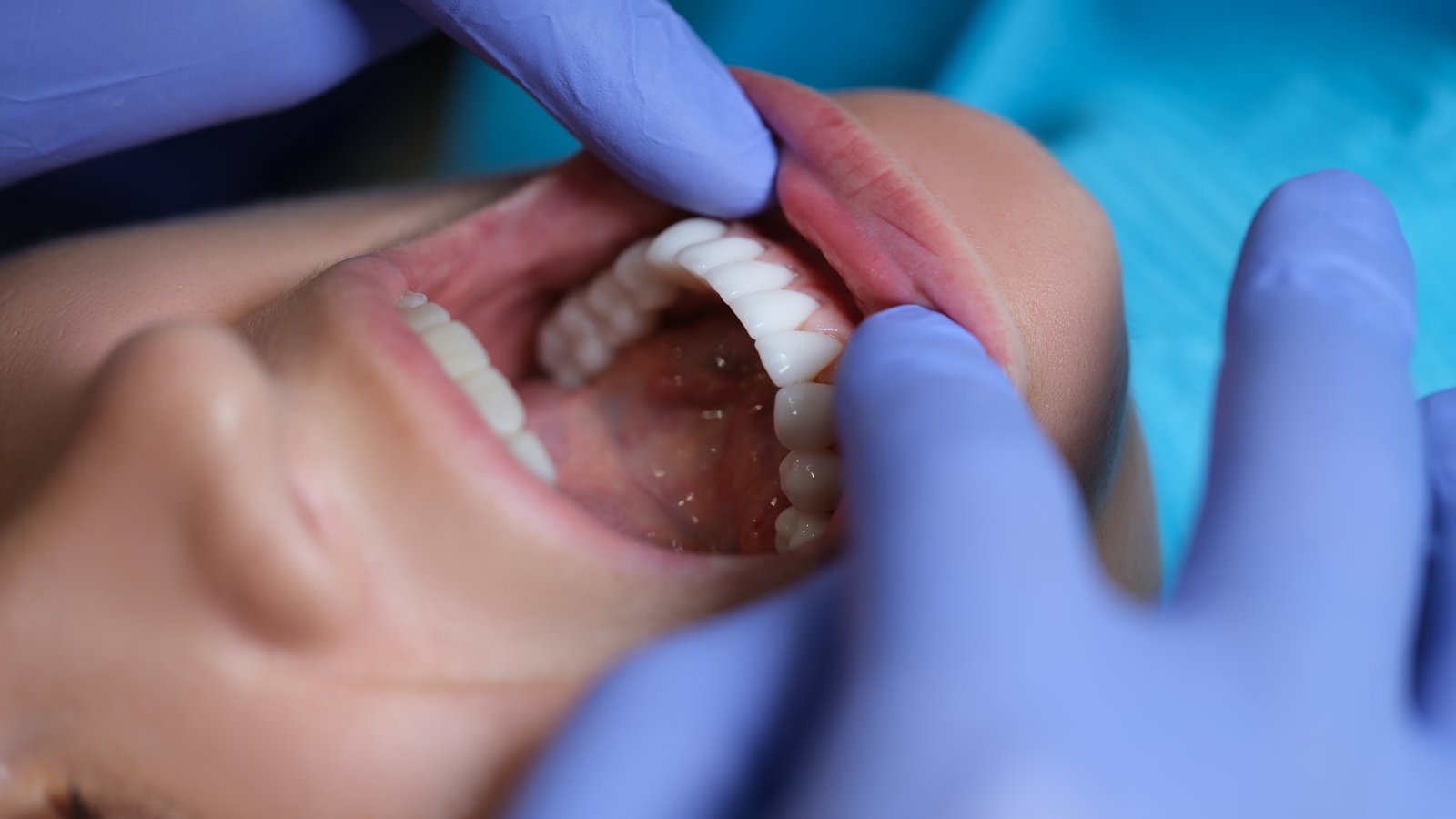
A screening is quick, painless, and typically added onto a routine cleaning or exam. We visually and physically examine your lips, cheeks, gums, tongue, the floor and roof of your mouth, and the lymph nodes in your neck for anything that looks or feels out of the ordinary. Research from the National Institute of Dental and Craniofacial Research highlights how early detection through simple visual exams continues to be one of the most effective tools available for improving outcomes.
The Screening, Step by Step
Every screening follows the same basic sequence, and none of it involves needles or rinses:
- Health history: We review your medications, tobacco and alcohol use, and any new symptoms you have noticed.
- Outside check: We look at your face and lips and gently feel your jaw and neck for lumps or swelling.
- Inside exam: With a light and mirror, we check your gums, cheeks, tongue, the floor and roof of your mouth, and the back of your throat. We may gently hold your tongue with gauze to see its sides and underside, which are easy to miss in a mirror at home.
- Findings: We tell you what we saw right away and explain any follow-up we recommend.
This approach follows the American Dental Association’s oral cancer guideline, which recommends that dentists update each adult patient’s medical, social, and dental history and perform a visual and tactile exam both inside and outside the mouth. We are looking for sores that have not healed, white patches (leukoplakia), red patches (erythroplakia), and tissue that feels firm, thickened, or fixed in place, since texture can reveal changes that color alone does not.
If we notice anything unusual, we will discuss next steps with you directly rather than leaving you with more questions than answers. In many cases, a spot turns out to be harmless, but we always take a cautious approach so nothing gets overlooked, and we will let you know if a shorter follow-up interval makes sense for your situation.
What Happens If a Spot Needs Follow-Up?
Most spots we find are not cancer. Cheek bites, irritation from a sharp tooth or appliance, and canker sores are far more common. When something looks like it may be temporary, we note its size and location and ask you to come back in about two weeks so we can see whether it has healed.
If an area persists or looks concerning, the next step is a definitive diagnosis. The ADA guideline names a biopsy with laboratory analysis as the first choice for diagnosing oral cancer and precancerous changes, and it recommends against relying on brush tests to screen patients who have no symptoms. When a biopsy is needed, we explain what we saw and help arrange it through our oral surgery team, so you know exactly what comes next.
Why Finding Changes Early Matters
Outcomes for oral cancer depend a great deal on how far it has spread when it is found. The American Cancer Society’s survival statistics show much better survival when cancer of the mouth is caught while it is still localized than after it has spread to distant parts of the body. The American Cancer Society also notes that many pre-cancers and cancers of the mouth and throat are first found during routine exams by a dentist, doctor, or hygienist, often while they are still small.
We also want to be clear about what screening can and cannot promise. The National Cancer Institute states that there is not enough evidence to establish whether routine screening reduces deaths from oral cancer. What a careful exam does offer is a regular, trained look at tissue you cannot easily see yourself, so changes get evaluated instead of overlooked.
Making Screenings Part of Your Regular Routine
The easiest way to stay on top of oral cancer prevention is to keep up with your regular dental visits. When you come in for routine dental exams and professional cleanings, a screening is already built into the appointment, so there is no extra step for you to remember and no additional cost to plan around.
Between visits, it also helps to keep an eye out for changes on your own. A few signs worth mentioning to our team include:
- A sore or ulcer that has not healed after two weeks
- A red or white patch inside the mouth
- Persistent numbness or tenderness in the face or mouth
- Difficulty chewing, swallowing, or moving the jaw
- A lump or thickening in the cheek or neck
If you notice any of these changes, do not wait until your next scheduled visit to tell us. Reaching out sooner gives our team the chance to take a closer look and put your mind at ease.
How to Check Your Own Mouth
A monthly self-check takes about a minute. In good light, look at your lips, gums, the inside of your cheeks, the roof of your mouth, and every surface of your tongue, including the sides and underneath. Then gently feel your neck and the area under your jaw for any new lumps. Our article on what your tongue can tell you about your health explains which tongue changes are usually harmless and which are worth a call.
Schedule Your Screening With Ponce Dental Studio
Our team at Ponce Dental Studio combines AI-driven technology with a caring, detail-oriented approach to help catch potential problems before they become serious. We are proud to be in-network with Delta Dental, Principal, and Ameritas, and we work with you to find financing options that fit your budget through our financing and insurance programs. Whether it has been a year since your last screening or you have noticed a change that concerns you, our care team is ready to help.
Do not put off a screening that could make a real difference in your health. You can also check out our YouTube channel for a closer look at what to expect during your visit. Contact our office today to schedule your next appointment with us for greater peace of mind in your oral and overall health.
 Dr. Frank Nia is a distinguished cosmetic and restorative dentist, co-founder of Ponce Dental Studio in Atlanta, GA. With a DMD from the University of Pennsylvania School of Dental Medicine and an MSEd in Higher Education, Dr. Nia brings over a decade of experience in managing multi-site dental practices. Known for his innovative approach to dentistry, he combines cutting-edge technology with compassionate care. Dr. Nia is a Fellow of the International Congress of Oral Implantologists and holds licenses in multiple states, including certification for oral and I.V. Sedation therapy in Georgia.
