
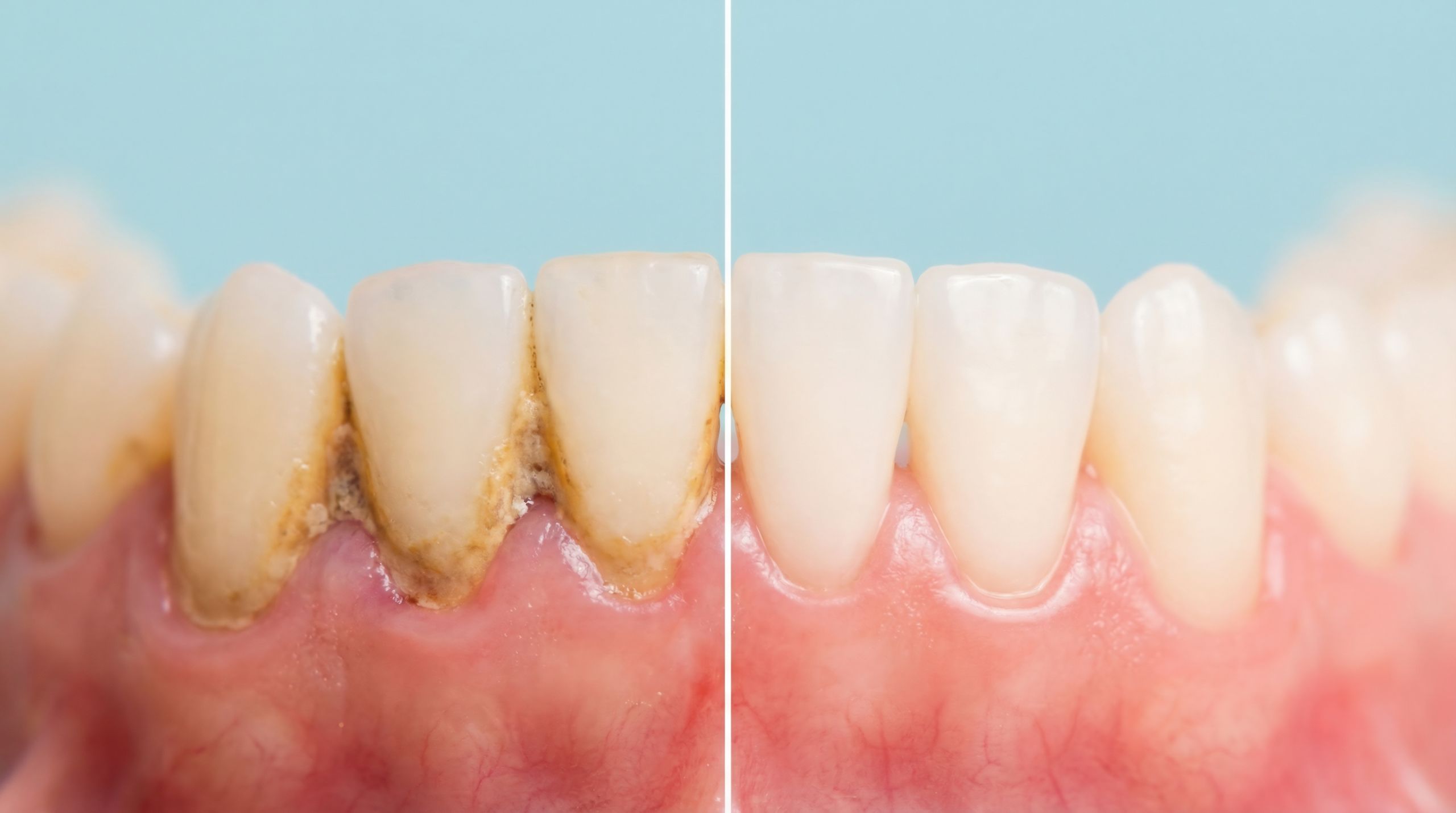
Your gums bleed a little when you brush, so you figure it is nothing to worry about. For many people, that small sign is the first clue that plaque and tartar have accumulated below the gumline, a stage at which a routine cleaning is no longer enough to fix the problem.
At Ponce Dental Studio, we see this scenario often, and a deep cleaning is usually the most direct way to get ahead of it before it becomes a bigger issue. We want you to understand exactly what this procedure involves and how to tell whether your gums need it.
What Is a Deep Cleaning?
A deep cleaning, known clinically as scaling and root planing, targets tartar and bacteria that have collected below the gumline where a standard cleaning cannot reach. Scaling removes hardened deposits from the tooth surface and root, while root planing smooths the root itself so your gum tissue has a cleaner surface to reattach to.
This two-part process addresses the early stages of gum disease before the infection spreads further and damages the bone that holds your teeth in place. Local anesthesia is typically used to keep the area comfortable, and depending on how much tartar has built up, the treatment may be completed over one or two visits.
How Is It Different From a Regular Cleaning?
A standard cleaning focuses on the visible surfaces of your teeth and the area just below the gumline, mainly to prevent problems before they start. A deep cleaning goes further, reaching down into periodontal pockets, the small gaps that form between your teeth and gums once infection is present.
Those pockets develop only after gum disease has already taken hold, so a deep cleaning is a treatment, not simply a preventive step. Your gums cannot heal properly around teeth with hardened tartar trapped below the surface, which is why this deeper approach becomes necessary once the disease has progressed past gingivitis.
Signs You May Need a Deep Cleaning
Gum disease often develops quietly, so it helps to know what to watch for between visits. A few common signs include:
- Bleeding Gums: Gums that bleed during brushing or flossing, even occasionally, often signal inflammation below the surface.
- Persistent Bad Breath: Bad breath that does not improve with brushing can point to bacteria trapped beneath the gumline.
- Gum Recession: Gums pulling away from the teeth can expose root surfaces and make teeth appear longer.
- Loose Teeth: Teeth that feel less stable may indicate bone loss from advancing periodontal disease.
If any of these sound familiar, an evaluation can confirm whether a deep cleaning is the right next step. According to the Centers for Disease Control and Prevention, about four in ten U.S. adults 30 years or older had some level of periodontitis, so if you recognize these signs, you are far from alone.
What Happens During the Deep Cleaning Procedure?
Before beginning, we measure the depth of your periodontal pockets to determine how far the infection has progressed and which areas need attention. We then use specialized instruments to remove tartar from below the gumline, working section by section.
Our approach pairs gum disease treatment with AI-driven diagnostics, so we can pinpoint problem areas with more precision than a visual exam alone allows. Mild soreness or sensitivity for a day or two afterward is common, and most patients return to their normal routine quickly. A follow-up visit lets us confirm the pockets are shrinking as expected.
What if Gum Disease Has Already Progressed Further?
For cases where a deep cleaning alone is not enough, we also offer laser dentistry as a more targeted option for treating advanced gum disease. This approach can address infected tissue with less discomfort and a faster recovery than traditional surgical methods, making it a helpful option for patients who need more than a standard deep cleaning can provide.
Whatever stage your gum health is at, catching it early is always easier to manage than waiting until symptoms become harder to ignore. Recognizing the early signs and getting a proper evaluation can prevent a great deal of discomfort and expense down the road.
Schedule Your Gum Health Evaluation With Ponce Today
Bleeding gums and bad breath are not something to brush off, and a deep cleaning may be exactly what your smile needs to get back on track. Our team combines same-day care options with a technology-forward approach, so you can get answers about your gum health without unnecessary delays.
We are proud to bring “Dentistry Done Different” to patients throughout Atlanta, and we would be glad to help you take the next step toward healthier gums. You can also find more oral health tips on our YouTube channel. Reach out through our contact form to schedule your evaluation.
 Dr. Frank Nia is a distinguished cosmetic and restorative dentist, co-founder of Ponce Dental Studio in Atlanta, GA. With a DMD from the University of Pennsylvania School of Dental Medicine and an MSEd in Higher Education, Dr. Nia brings over a decade of experience in managing multi-site dental practices. Known for his innovative approach to dentistry, he combines cutting-edge technology with compassionate care. Dr. Nia is a Fellow of the International Congress of Oral Implantologists and holds licenses in multiple states, including certification for oral and I.V. Sedation therapy in Georgia.